
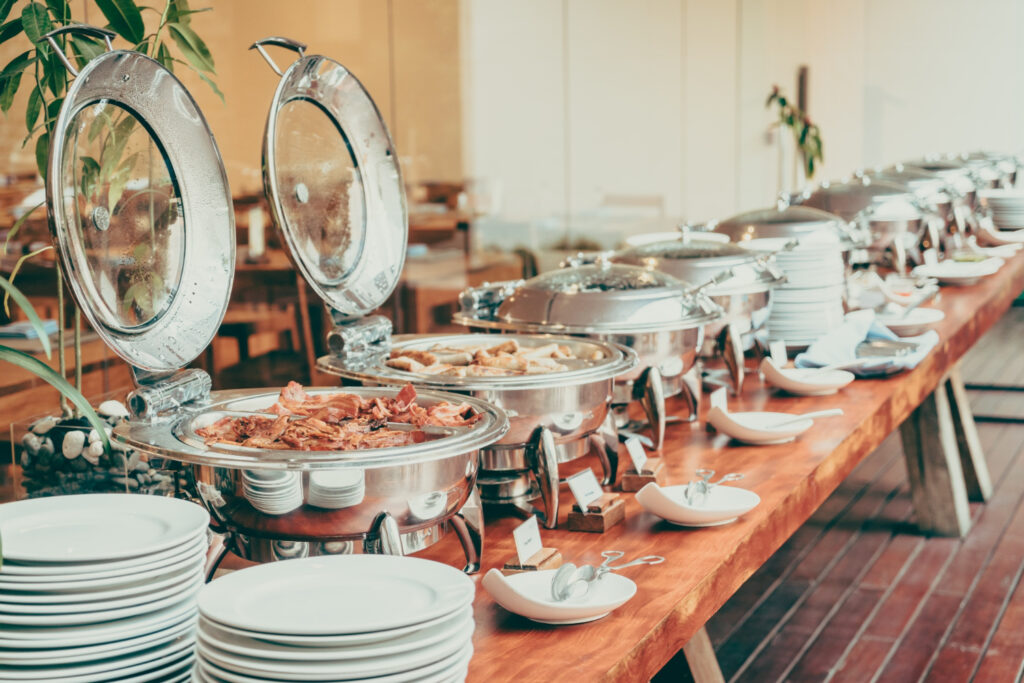
Introduction In the world of modern events, food is no longer just a necessity—it’s an experience. Whether it’s a wedding, corporate gala, private party, or cultural celebration, the way food is presented and served can set the tone for the entire event. This is where onsite catering steps in to transform ordinary gatherings into unforgettable culinary journeys. Onsite catering services bring the kitchen to your venue, offering guests the thrill of freshly prepared meals right before their eyes. In this blog, we delve into the world of onsite catering, its benefits, planning essentials, trending styles, and why it’s becoming a preferred choice for event organizers.
What is Onsite Catering? Onsite catering involves preparing and serving food directly at the event venue rather than transporting pre-cooked meals. Caterers set up temporary or mobile kitchens at the location, ensuring meals are cooked fresh and tailored to guests’ preferences. This form of catering provides an interactive, live cooking experience that adds vibrancy and engagement to any event.
Benefits of Onsite Catering
- Freshness Guaranteed: With food cooked on the spot, guests enjoy meals at their freshest, enhancing flavor and overall satisfaction.
- Customization: Onsite chefs can accommodate special dietary needs, preferences, or last-minute changes, providing a highly personalized experience.
- Guest Engagement: Live cooking stations and chefs in action create a dynamic atmosphere. Guests can interact with chefs, learn about the dishes, and watch their meals being prepared.
- Flexibility: Onsite setups can be adapted to various venue types, from outdoor gardens and beaches to indoor banquet halls.
- Visual Appeal: The aroma, sizzle, and visuals of live cooking stations enhance the sensory appeal of the event.
Popular Onsite Catering Styles
- Live Cooking Stations: Guests can watch chefs prepare dishes like pasta, grills, or crepes at dedicated counters.
- BBQ and Grilling Setups: Ideal for outdoor events, offering a rustic, casual, and flavorful experience.
- Food Trucks and Mobile Kitchens: These bring a trendy, street-food vibe to private parties and corporate functions.
- Interactive Buffets: Guests build their own dishes—salads, tacos, burgers—with live assistance from chefs.
- Theme-Based Stations: Cultural or cuisine-specific counters like Indian chaat, sushi bars, or Italian antipasti.
Event Types That Benefit Most from Onsite Catering
- Weddings: Enhances the celebratory atmosphere with multi-course, gourmet options and live action.
- Corporate Events: Breaks the monotony of conventional buffets, offering an engaging and professional touch.
- Birthday and Private Parties: Adds a fun, interactive element, especially for smaller guest lists.
- Festivals and Cultural Gatherings: Supports diverse food options for large, varied audiences.
- Outdoor and Destination Events: Offers complete flexibility with setup and service in remote or non-traditional locations.
Planning Essentials for Onsite Catering
- Venue Assessment: Ensure the location can accommodate temporary kitchens, power supply, and ventilation.
- Permits and Safety: Local health and fire regulations must be followed; caterers should be certified and experienced.
- Menu Selection: Choose dishes that suit live preparation and can be cooked efficiently under time constraints.
- Logistics and Setup: Consider the flow of guests, positioning of stations, and staffing to avoid congestion.
- Backup Plans: Always prepare for weather disruptions (for outdoor events) or equipment failure.
Challenges and How to Overcome Them
- Space Limitations: Work closely with caterers to design compact but functional kitchen areas.
- Power & Water Supply: Arrange generators and water tanks if the venue lacks sufficient utilities.
- Weather Conditions: Use tents, shades, and waterproof equipment for unpredictable weather.
- Time Management: Live cooking takes time; plan staggered service or pre-prep stages to avoid delays.
Trends in Onsite Catering
- Sustainable Practices: Use of biodegradable plates, cutlery, and locally sourced ingredients.
- Fusion Cuisine: Creative blends of global flavors prepared live to wow guests.
- Chef’s Table Experience: Intimate settings where guests are served directly by chefs with explanations and stories behind each dish.
- Health-Focused Menus: Live salads, fresh smoothies, and gluten-free or vegan counters.
Why Onsite Catering is the Future of Event Dining As guests become more discerning and event experiences more personalized, the demand for fresh, engaging, and unique food service grows. Onsite catering ticks all the boxes—offering not just food, but a show. It allows event hosts to stand out, impress their guests, and create lasting memories.
Moreover, the adaptability of onsite catering to various event scales, themes, and dietary needs makes it a versatile choice. From the drama of a sizzling wok to the elegance of hand-rolled sushi, the culinary theatrics of onsite catering leave a lasting impact.
Conclusion Onsite catering has revolutionized how food is served and experienced at events. It’s not just about feeding people—it’s about entertaining, engaging, and delighting them through food. If you’re planning an event and want it to be truly memorable, consider the dynamic appeal of onsite catering. With the right caterer and a bit of planning, you can serve not just a meal, but an unforgettable culinary experience that your guests will rave about long after the event is over.